Skip to content

We’ll help you pick the right one

Half Racks & Squat Racks

Half racks and squat racks provide an open alternative to a full power rack or power cage, giving lifters easier bar access while taking up less visual and physical space. The category ranges from compact squat stands for straightforward barbell training to commercial half racks with safety arms, pull-up bars, plate storage, and expandable training attachments.

Shop options for home gyms, schools, apartment fitness centers, training studios, and commercial strength rooms, including half racks, squat racks, squat stands, folding racks, double half racks, and rack-and-storage configurations.

  • TKO Half Rack Machine 921HR TKO Half Rack Machine 921HR J Cups and Safety Arms Save 9%
    Original Price $2,680.00
    Current Price $2,440.00
    TKO TKO Half Rack Machine 921HR

    Get Strength with the TKO Half Rack Machine and Space Saving Design The TKO Strength Equipment line of cages and benches provides high quality prod...

    View full details
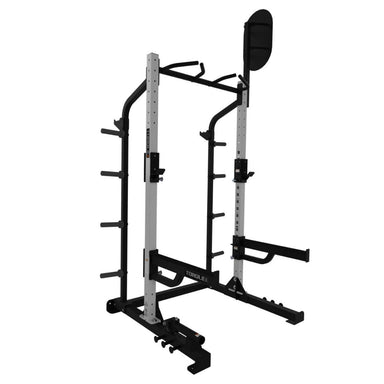
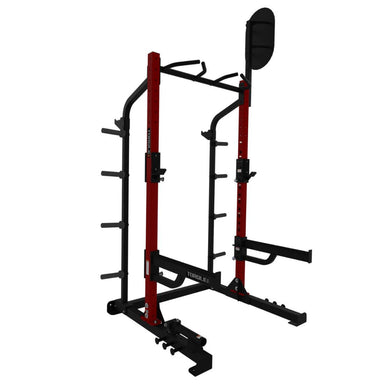
  • Torque Arsenal 8 Squat Rack - X1 Package - Competitors Outlet Torque Arsenal 8 Squat Rack - X1 Package-1 Sold out
    Original Price $2,762.00
    Current Price $2,302.00
    TORQUE Torque Arsenal 8 Squat Rack - X1 Package

      The Arsenal 8 Squat Rack - X1 package expands the functionality and storage capabilities of the base Arsenal by adding rear nylon covered weight ...

    View full details
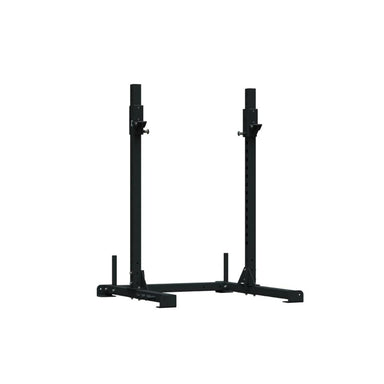
  • Torque Arsenal 8 Squat Rack - Competitors Outlet Torque Arsenal 8 Squat Rack-1 Sold out
    Original Price $1,362.00
    from $1,135.00
    TORQUE Torque Arsenal 8 Squat Rack

    The 8' Arsenal squat rack is built with the same 3"x3" 11 gauge uprights and uses the same bar catches and attachments as the X-Rack series. The he...

    View full details
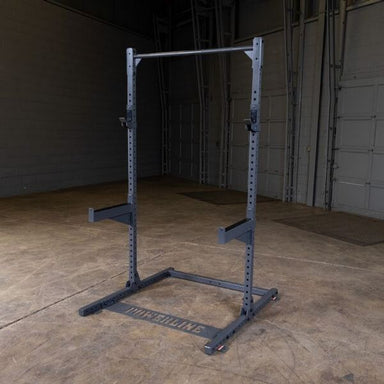
  • BodyKore Squat Rack G255 Right View With Background
BodyKore Squat Rack G255 Save 8%
    Original Price $1,859.00
    Current Price $1,705.00
    BodyKore BodyKore Squat Rack G255

    Train Big in Low Spaces – BodyKore Lunge Rack G255 Perfect for home gyms or facilities with limited ceiling height, the BodyKore Lunge Rack G25...

    View full details

Choosing an Open Rack for Your Training Space

Half racks and squat racks solve a similar problem: they give you a stable place to unrack a loaded barbell without enclosing the lifter inside a full cage.

The biggest differences are frame depth, stability, safety-arm length, storage, attachment options, and overall footprint.

A simple squat stand may be enough for someone who mainly wants to squat and press in a small home gym. A commercial half rack makes more sense when the station will also support bench pressing, pull-ups, plate storage, multiple users, and heavier daily training.

Understanding how the rack is built is more useful than focusing only on what the manufacturer calls it.

Half Rack, Squat Rack or Squat Stand?

These terms are sometimes used loosely by manufacturers, but the physical structure gives you a better way to compare them.

Half Racks

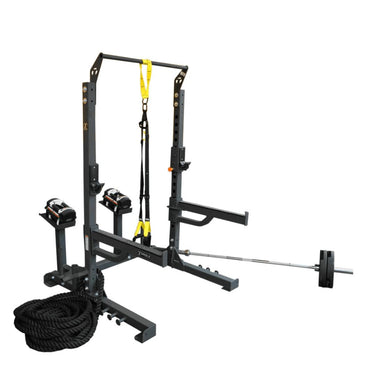
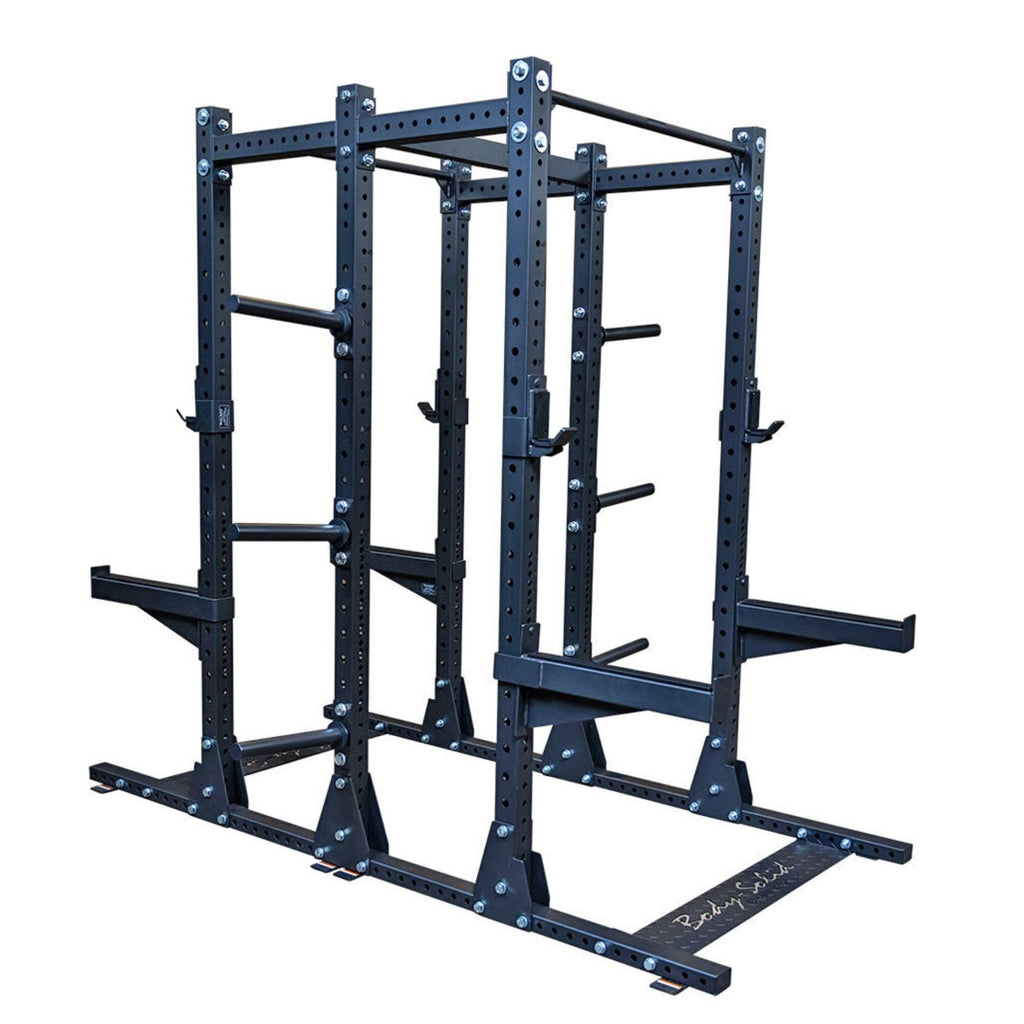
A half rack typically has substantial uprights plus additional frame depth behind the lifting position. Many include rear storage posts, pull-up bars, large safety arms, or attachment points.

Unlike a full power cage, you normally train in front of the rack rather than inside an enclosed frame.

That open design makes half racks especially useful in commercial strength rooms where coaches want easy access to the lifter and where several stations may sit side by side.

Squat Racks

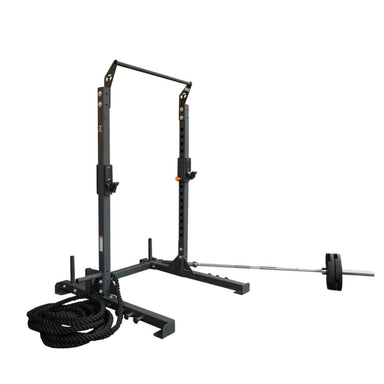
A squat rack usually has a simpler, more open structure. It still gives you adjustable bar positions for squats, presses, and bench work, but it may have less rear structure and fewer integrated accessories than a half rack.

Squat racks can be a strong middle ground for home gyms: more substantial than independent stands without taking up the depth of a full cage.

Squat Stands

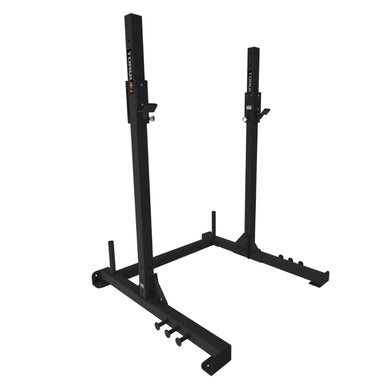
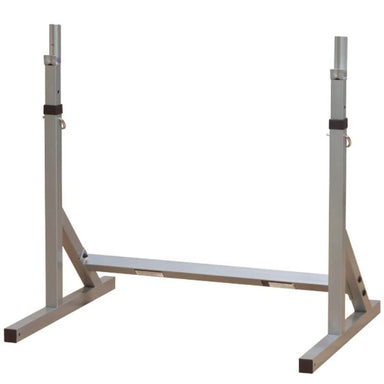
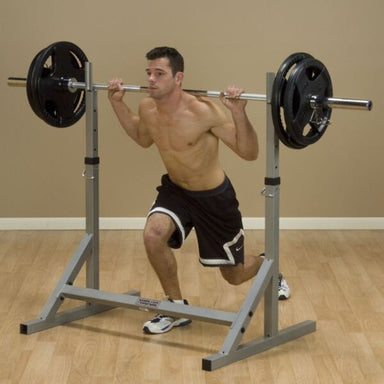
A squat stand is generally the simplest and most compact option.

These systems prioritize bar support rather than creating a large training station. They can work well in garages, apartments, smaller rooms, or situations where the equipment may need to be moved.

The tradeoff is usually less storage, fewer attachment options, and a smaller safety system compared with a commercial half rack.

How Much Space Does an Open Rack Actually Need?

One of the main reasons shoppers choose a half rack or squat rack is space efficiency, but the published rack dimensions tell only part of the story.

Depth Matters Most

Because you train in front of an open rack, you do not necessarily need the same internal working depth as a full power cage.

A shallow squat rack or stand can therefore work well against a wall or along the edge of a home gym.

A deeper half rack gives you more structural stability and may provide rear plate storage, but it takes up more floor space.

Don't Forget the Barbell

A seven-foot Olympic bar is substantially wider than the rack itself.

You need enough space on both sides to:

  • load and unload plates
  • walk around the bar
  • avoid walls and nearby equipment
  • safely rerack after a lift

Bench Clearance

If you plan to bench press from the rack, measure the bench and rack together.

A rear crossmember, plate-storage horn, or low frame support can interfere with bench placement on some racks.

Ceiling Height

Half racks often include pull-up bars, so overhead clearance matters.

Measure flooring thickness, ceiling beams, lighting, ductwork, and enough headroom to perform pull-ups comfortably.

Safety, Storage and Attachments

The simplest squat stands and the largest commercial half racks may both hold a barbell, but their safety systems and expandability can be very different.

Safety Arms

Open racks typically rely on spotter arms positioned outside the uprights.

Longer, heavier-duty arms provide a larger area to catch the bar during a failed squat or bench press.

Always position the arms for the individual exercise and follow the rack manufacturer's rated capacity.

J-Cups

J-cups determine where the bar starts and finishes.

Frequent users should look for sturdy, easily adjustable cups with protective lining where the barbell contacts the rack.

Integrated Storage

Many larger half racks include rear weight horns or can be paired with storage extensions.

That can keep plates close to the lifting station and reduce the need for separate weight trees.

Storage also adds depth, so plan it into the footprint rather than treating it as an afterthought.

Pull-Up and Training Attachments

Depending on the rack, available additions may include:

  • pull-up bars
  • dip attachments
  • landmine attachments
  • band pegs
  • resistance anchors
  • plate storage
  • bar storage
  • cable attachments
  • rear extensions

Attachment compatibility is manufacturer-specific. Upright size, hole diameter and hole spacing all matter, so attachments should not be assumed interchangeable between brands.

Home, Garage and Commercial Half Rack Applications

The best rack is not necessarily the largest one. It is the one that gives you the safety and training options you need without consuming unnecessary space.

Home and Garage Gyms

For a home gym, a compact squat rack or standard half rack can provide enough versatility for squats, bench presses, overhead presses, pull-ups, and other barbell lifts without dedicating an entire room to a full cage.

Folding and slim racks can be especially useful where the floor has to serve more than one purpose.

Personal Training Studios

A half rack provides an open coaching environment. The trainer can move around the athlete easily, and the rack can support multiple movements from a relatively compact station.

Schools and Athletic Facilities

Half racks work well in strength rooms where multiple lifting stations need to be arranged in rows.

Commercial models with storage can help keep plates close to each station while preserving clear training lanes.

Commercial Gyms and Multifamily Fitness Centers

For higher-traffic facilities, prioritize commercial construction, durable adjustment hardware, substantial safety arms, anchoring requirements, and long-term replacement-part support.

A small difference in price may matter less than whether the rack can withstand repeated daily adjustment by many users.

Which Open Rack Setup Makes the Most Sense?

Start with what you actually need the station to do.

Choose a Squat Stand for Maximum Space Efficiency

A squat stand makes sense when the priority is basic barbell training in the smallest practical footprint.

It is a strong fit for simpler home gyms or secondary lifting stations.

Choose a Squat Rack for a More Substantial Open Station

A squat rack gives you more structure than a basic stand without requiring the depth of a full cage.

This can be the right balance for a home lifter who wants a permanent rack but does not need a large commercial setup.

Choose a Half Rack for Versatility

A half rack is the strongest all-around choice when you want open access plus safety arms, pull-ups, storage, and attachment options.

This is often the better long-term purchase for serious home lifters and commercial facilities.

Choose a Double Half Rack for Multi-User Training

Connected or double half racks make sense in schools, training centers, and commercial strength rooms where two lifters need independent stations within one integrated structure.

Choose a Rack with Storage When Floor Planning Matters

Integrated plate and accessory storage can reduce the need for separate storage units.

It does increase the rack's overall footprint, but in the right layout it can create a more organized and efficient strength station.

Half Rack vs Power Rack: What Changes in Real Use?

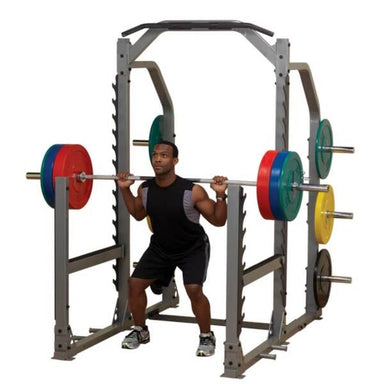
A full power rack surrounds the lifting area with uprights. A half rack leaves the front training area open.

That structural difference changes the way the rack feels in a room.

Choose a Half Rack When You Want Open Access

A half rack makes it easier to approach the bar, move a bench into position, coach another lifter, and transition between exercises.

It also tends to occupy less depth than a comparable full cage.

That is one reason half racks are common in school weight rooms, collegiate facilities, performance centers, personal-training studios, and commercial gyms.

Choose a Power Rack When Enclosed Safety Is the Priority

A full power rack lets the lifter work inside the frame with internal safety bars or straps.

For someone regularly training alone with heavy barbell loads, that enclosed structure may be worth the additional footprint.

What About a Squat Stand?

A squat stand strips the concept down further.

If you need a straightforward station for squats and presses and have very limited space, a stand may be enough. If you expect to add storage, pull-ups, heavy spotter arms, and multiple attachments, a half rack generally provides more room to grow.

Common Half Rack & Squat Rack Buying Mistakes

Choosing only by rack width. Depth, ceiling height, barbell clearance and working space are equally important.

Assuming every open rack provides the same safety. Compare the size, capacity and adjustability of the spotter arms.

Ignoring bench placement. Make sure your bench can move far enough into the station for comfortable bar positioning.

Buying a squat stand when you really want a complete training station. If you expect pull-ups, storage and multiple attachments, a half rack may be the better long-term choice.

Assuming all attachments are universal. Upright dimensions, hole spacing and hardware vary by manufacturer.

Forgetting plate storage. Adding separate storage later may require more floor space than choosing a rack with integrated storage from the beginning.

Overlooking anchoring requirements. Some commercial racks are designed to be bolted down for proper stability.

Buying commercial equipment simply because it is heavier. A commercial rack is worth the investment when the expected use justifies it; many home lifters can get everything they need from a properly rated home or light-commercial model.

Still deciding between a half rack, squat rack or squat stand? These answers cover the most common buying questions.

Common Questions About Half Racks & Squat Racks

  • A half rack generally has more frame depth, larger safety arms, attachment options and often integrated storage. A squat rack is typically simpler and more open. Both support barbell lifts, but the half rack is usually designed as a more complete training station.

  • The terms sometimes overlap, but squat stands are generally the simplest and most compact form of barbell support. Squat racks usually have a more substantial connected frame.

  • A half rack generally provides a more substantial safety system because it can support larger spotter arms and a heavier frame. Proper safety still depends on correct setup, exercise selection and the manufacturer's rated capacity.

  • Yes. Half racks are commonly used for bench pressing. Make sure your bench fits the rack geometry and that the spotter arms can be positioned at the correct height.

  • Many squat racks and stands can support bench pressing when paired with a compatible bench and properly positioned safety arms. Check the rack's design, capacity and available safety hardware before using it for bench work.

  • Measure the rack itself, then account for the full width of your barbell, plate loading, bench movement and space to walk around the station. A rack can technically fit a room but still be uncomfortable to use if the working clearance is too tight.

  • Some do and some do not. Commercial and high-use racks are more likely to require anchoring. Always follow the manufacturer's installation requirements rather than assuming a rack is freestanding.

  • Many half racks support weight-storage horns, rear extensions or integrated storage systems. Compatibility varies by manufacturer and model, so confirm the approved accessories before ordering.

  • A double half rack connects two lifting stations into one larger system. This configuration is commonly used in schools, athletic facilities and commercial gyms where multiple lifters need dedicated rack stations.

  • Choose a rack rated comfortably above the loads you expect to lift. Commercial facilities should also consider repeated daily use by multiple lifters, not simply one person's maximum barbell weight.

Find the Right Rack for Your Space

Tell us about your available floor space, ceiling height, training style and facility type, and we’ll help you compare half racks, squat racks and squat stands.

Send us a message