Skip to content

We’ll help you pick the right one

Power Racks & Power Cages

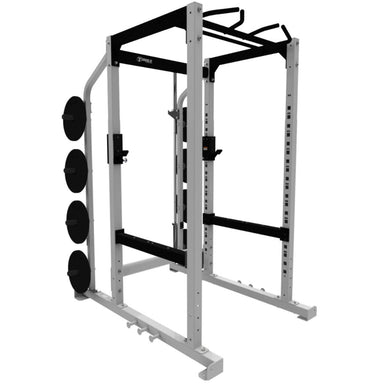
Power racks and power cages are the foundation of serious barbell training. Built for squats, bench press, pull-ups, presses, and other compound lifts, these full-height rack systems give lifters a stable training area with adjustable J-hooks, safety bars or straps, and attachment options for expanding the setup over time.

The terms power rack and power cage are often used interchangeably for enclosed four-post or six-post rack systems. This collection includes home and commercial models designed for solo lifting, strength rooms, schools, training studios, and high-use fitness facilities.

Shop by: Half Racks | Squat Racks & Squat Stands

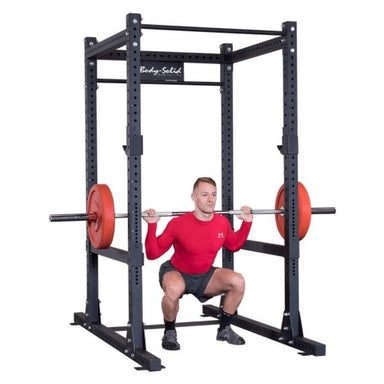
  • Body-Solid GPR400 Power Rack Under 80" Tall Body-Solid Power Rack GPR400 without background Save 19%
    Original Price $1,040.00
    Current Price $840.00
    Body-Solid Body-Solid Power Rack GPR400

    Conquer Your Strength Goals using the Body-Solid Power Rack GPR400 with Compact Design Push your limits safely and efficiently with the Body-Solid ...

    View full details
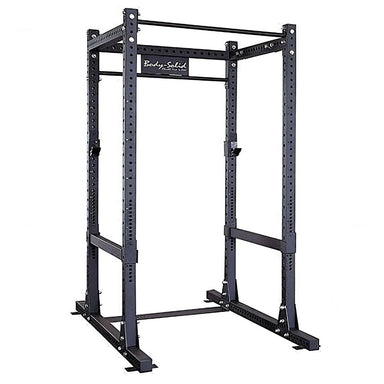
  • Muscle D Power Cage MD-PC Save 6%
    Original Price $4,250.00
    Current Price $3,995.00
    Muscle D Muscle D Power Cage FW-PC

    Strengthen and Build Full Body Muscles with the Muscle D Power Cage The Muscle D Power Cage is a heavy-duty power rack cage built for the pros, sta...

    View full details
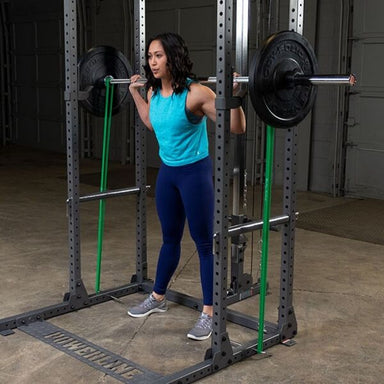
  • Torque - Power Cage-2 Torque - Power Cage-1 Save 13%
    Original Price $2,630.00
    Current Price $2,295.00
    TORQUE Torque - Power Cage

      The Torque Power Cage provides spotting capability and a sense of security while using the lifting zone within the platinum powder coated 3” x 3”...

    View full details
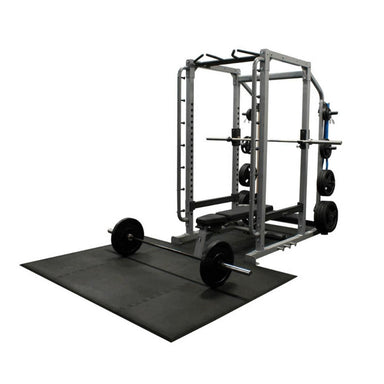
  • TKO Power Rack Machine 920PR features TKO Power Rack Machine 920PR with weight horns, j cups, and safety bars Save 9%
    Original Price $2,950.00
    Current Price $2,680.00
    TKO TKO Power Rack Machine 920PR

    TKO Power Rack Machine  The TKO Strength Equipment line of cages and benches provides high quality product with a simple design to enhance the user...

    View full details

How to Choose the Right Power Rack or Power Cage

A power rack looks simple, but the details determine how well it fits your training style and your room. Rack depth, height, hole spacing, safety systems, attachment compatibility, weight capacity, and whether the rack needs to be anchored all affect the ownership experience.

The first question is not simply “Which rack is strongest?” It is how you plan to train inside it.

A home lifter may prioritize footprint and attachment versatility. A commercial facility may care more about durability, user throughput, anchoring, and long-term parts support. This guide explains the differences so you can compare power racks and power cages by how they will actually be used.

What Is the Difference Between a Power Rack and a Power Cage?

In most cases, power rack and power cage refer to the same general style of equipment: a full-height enclosed lifting structure with four or more uprights, adjustable bar hooks, and safety hardware that allows a lifter to train inside the frame.

Power Rack

“Power rack” is the most common modern term. It usually describes a four-post or six-post rack designed for barbell lifts such as squats, bench press, overhead press, rack pulls, and pull-ups.

Power Cage

“Power cage” emphasizes the enclosed structure. Some manufacturers still use this term in their product names, especially for full commercial cages.

In practical shopping terms, the difference is often branding rather than function.

Full Squat Cage

Some manufacturers also use names such as full squat cage or squat cage for the same enclosed rack style.

That is different from a simple squat stand or open squat rack, which does not surround the lifter with uprights and internal safeties.

Why the Enclosed Design Matters

The biggest advantage of a full rack or cage is the ability to use safety bars or safety straps inside the structure.

If a lifter misses a squat or bench press, those safeties can catch the bar before it reaches the floor or the lifter. That is one reason power racks are so popular for solo training.

Understanding Rack Size, Depth and Height

Two racks can look nearly identical online but feel completely different once installed. The published dimensions matter because a rack has both a physical footprint and a working training area around it.

Rack Depth

A deeper rack provides more room to move inside the cage and can make exercises such as squats, bench press, and rack pulls feel less confined.

A shallower rack saves floor space but may provide less room between the front and rear uprights.

For a compact home gym, depth can be one of the biggest deciding factors. In a commercial facility, additional working room may be worth the larger footprint.

Rack Height

Rack height affects both ceiling clearance and exercise options.

Taller racks provide more room for pull-ups and overhead movements, but they need adequate ceiling height. Always account for the rack itself plus any pull-up bars, attachments, flooring thickness, ceiling beams, ductwork, or lighting above it.

Working Clearance

Do not plan only around the published frame dimensions.

You also need room to:

  • load plates onto the bar
  • walk around the rack
  • move a bench in and out
  • perform pull-ups
  • access weight storage
  • use attachments safely

A rack that technically fits into a room can still feel unusable if it is pushed too tightly against walls or other equipment.

Safety Systems, J-Hooks and Attachment Compatibility

A good rack is more than a steel frame. The hardware you interact with every session affects both safety and ease of use.

J-Hooks

J-hooks support the barbell before and after a lift.

Look for hooks that are easy to reposition and include protective material where the bar contacts the rack. Commercial racks may also offer heavier-duty or roller-style options.

Pin-and-Pipe Safeties

Traditional pin-and-pipe systems use steel pins and safety tubes positioned between the uprights.

They are simple, durable, and effective, though they can take longer to reposition than some newer safety systems.

Safety Straps

Safety straps use heavy woven material suspended between the uprights.

They can be easier on barbell knurling and may reduce impact noise when the bar is dropped onto the safety system.

Spotter Arms

Spotter arms extend outward from the front uprights.

They are more common on half racks and open rack configurations, but some full racks can use them for exercises performed outside the cage.

Attachment Compatibility

Many modern racks can support accessories such as:

  • dip stations
  • landmine attachments
  • plate storage
  • bar storage
  • resistance-band pegs
  • cable attachments
  • additional pull-up handles
  • benches and lifting platforms

Compatibility is not universal. Before buying attachments, confirm the rack's upright dimensions, hole diameter, hole spacing, and manufacturer compatibility.

Home vs Commercial Power Racks

The core design is similar, but home and commercial racks are built around different levels of use.

Home Power Racks

A home rack may prioritize:

  • smaller footprint
  • lower price
  • easier assembly
  • attachment versatility
  • lower ceiling options

For one or two regular users, a well-built home rack can provide years of reliable training without the size or cost of a full commercial system.

Commercial Power Racks

Commercial racks are built for repeated daily use by many lifters.

They generally use heavier steel, more durable hardware, stronger welds, and components designed to withstand constant adjustment and impact.

Commercial buyers should also think about:

  • anchoring
  • traffic flow
  • replacement parts
  • storage
  • warranty coverage
  • spacing between multiple racks

When Commercial Construction Is Worth It at Home

Some home lifters still prefer commercial racks because they want maximum durability, heavier attachments, or a permanent training setup.

The better question is not simply “home or commercial?” but how hard the rack will be used and how long you expect to keep it.

Which Rack Style Is Right for You?

The right rack depends on your room, training style, and how much flexibility you want from one station.

For Heavy Solo Barbell Training

Choose a power rack or power cage if you regularly train alone and want an enclosed safety system for squats and bench press.

For Home Gyms With Enough Floor Space

A full rack is often the most versatile long-term choice because it can support multiple exercises and attachments in one structure.

For Smaller Rooms

If the rack depth is too large for the room, compare Half Racks and Squat Racks & Squat Stands before forcing a full cage into the space.

For Commercial Strength Areas

Commercial facilities should prioritize durability, clear working zones, safety hardware, and enough spacing for multiple users.

Half racks can be useful when several lifting stations need to fit along a wall, while full racks work well when enclosed training stations are preferred.

For Buyers Who Want Future Expansion

Look closely at the manufacturer's attachment ecosystem.

A rack that supports storage, cable attachments, dip handles, landmines, benches, and other accessories can evolve with your training needs over time.

Power Rack vs Half Rack vs Squat Rack

These three rack styles all support barbell training, but they use space differently.

Power Rack or Power Cage

A power rack surrounds the lifting area with uprights and allows the lifter to train inside the frame.

It is the strongest choice for lifters who prioritize enclosed safety, heavy barbell training, and attachment versatility.

Half Rack

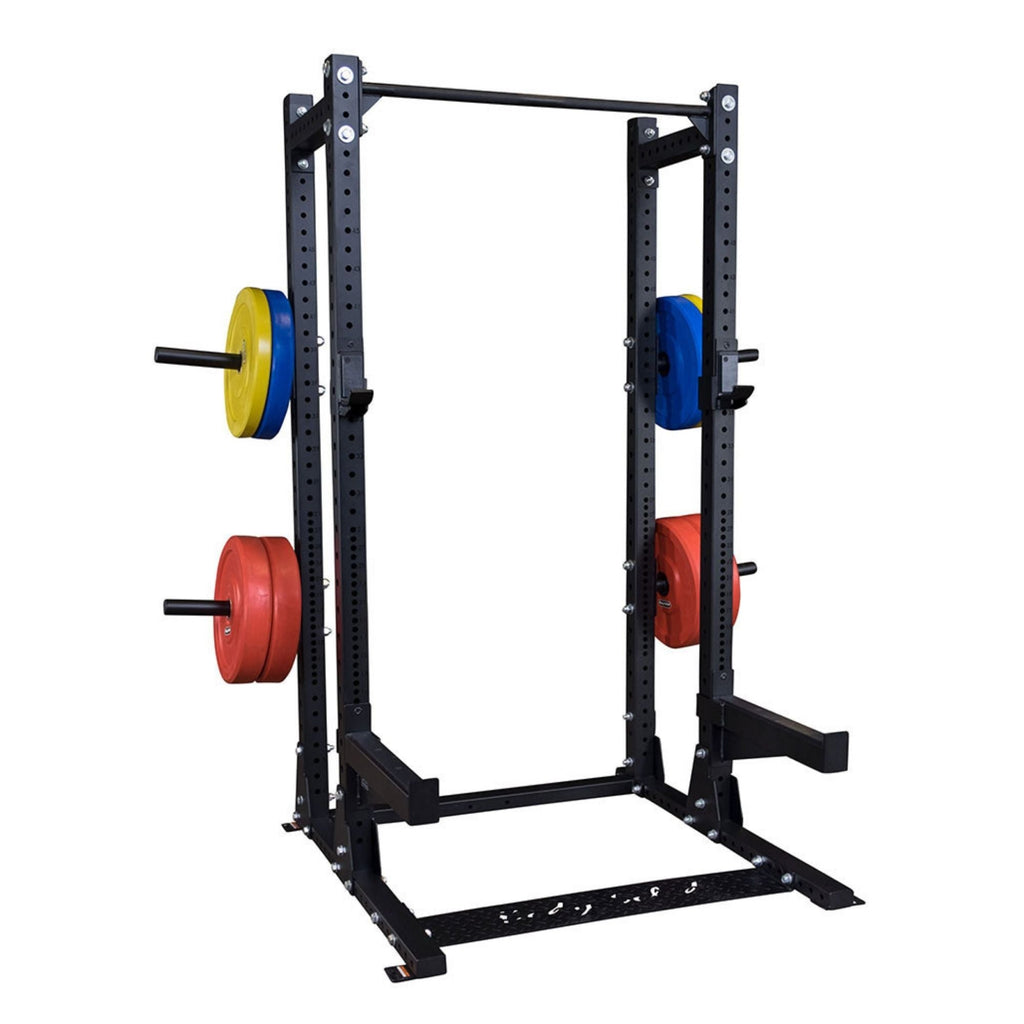
A half rack uses an open-front design with rear uprights and external spotter arms.

It takes up less visual and physical space than a full cage and provides easier access from the front.

Half racks are popular in commercial gyms and home gyms where open access matters more than lifting inside an enclosed cage.

Squat Rack or Squat Stand

Squat racks and squat stands are the simplest option.

They generally use two uprights or an open frame to support the bar without enclosing the lifter.

They work well when floor space is limited or when the buyer needs a straightforward setup for squats and presses rather than a full rack system.

Which Design Gives the Most Safety?

A properly configured full power rack generally provides the most enclosed safety because the lifter can position safeties inside the cage.

Half racks and squat racks can still provide effective protection when used with correctly positioned spotter arms.

Common Power Rack Buying Mistakes

  • Choosing by price alone. Rack dimensions, steel construction, safety systems, and attachment compatibility often matter more than the initial price difference.
  • Ignoring ceiling height. Pull-up bars and overhead attachments need additional clearance above the frame.
  • Measuring only the rack footprint. You also need working room for the barbell, bench, plates, and movement around the rack.
  • Assuming every attachment fits every rack. Upright size, hole spacing, and hardware dimensions vary between brands.
  • Buying a full cage when a half rack would fit the room better. A full rack is not automatically the right choice for every space.
  • Choosing a squat stand when enclosed safeties are important. Make sure the rack style matches how you actually train.
  • Overlooking anchoring requirements. Some commercial and heavy-use racks are designed to be bolted to the floor.
  • Failing to plan plate and bar storage. Storage added later can change the rack footprint and traffic flow.
  • Not thinking about bench access. Make sure the rack depth and room layout allow a bench to move in and out comfortably.

Still comparing rack styles? These answers cover the most common questions about power racks, power cages, dimensions, safety, installation, and attachments.

Frequently Asked Questions About Power Racks & Power Cages

  • Usually, yes. The terms power rack and power cage commonly describe the same enclosed four-post or six-post lifting structure. Manufacturers may use one term or the other, but both generally provide adjustable J-hooks and internal safety bars or straps for barbell training.

  • Power racks are commonly used for squats, bench press, overhead press, rack pulls, pull-ups, shrugs, and other barbell exercises. Attachments can also add movements such as dips, landmine exercises, cable work, or band resistance depending on the rack.

  • A full power rack generally provides a more enclosed safety environment because the lifter can position safety bars or straps inside the cage. A squat rack or squat stand can still be used safely with properly adjusted spotter arms, but it does not surround the lifting area in the same way.

  • Start with the manufacturer's published width, depth, and height, then add room around the rack for the barbell, plates, bench, and user movement.

    A standard Olympic bar is much wider than the rack itself, so you need clearance on both sides to load plates comfortably.

  • Your ceiling must be higher than the rack's listed height, with additional clearance for pull-ups, attachments, flooring, and overhead obstacles.

    If your room has a low ceiling, look for shorter rack models or consider a half rack or squat rack.

  • It depends on the rack.

    Some freestanding models are designed to remain stable without anchoring, while commercial and heavy-use racks may require floor anchoring. Always follow the manufacturer's installation requirements.

  • Safety bars are rigid steel supports positioned between the uprights. Safety straps use heavy woven material suspended across the rack.

    Both can catch a failed lift when positioned correctly. Straps may create less noise and can be gentler on barbell knurling.

  • A power rack creates an enclosed lifting area between four or more uprights.

    A half rack has a more open front and usually relies on external spotter arms. Half racks can save space and provide easier access, while full power racks provide a more enclosed training environment.

  • Choose a rack with a rated capacity comfortably above the loads you expect to use.

    For commercial facilities, capacity should also reflect repeated use by many lifters rather than one individual's maximum lift.

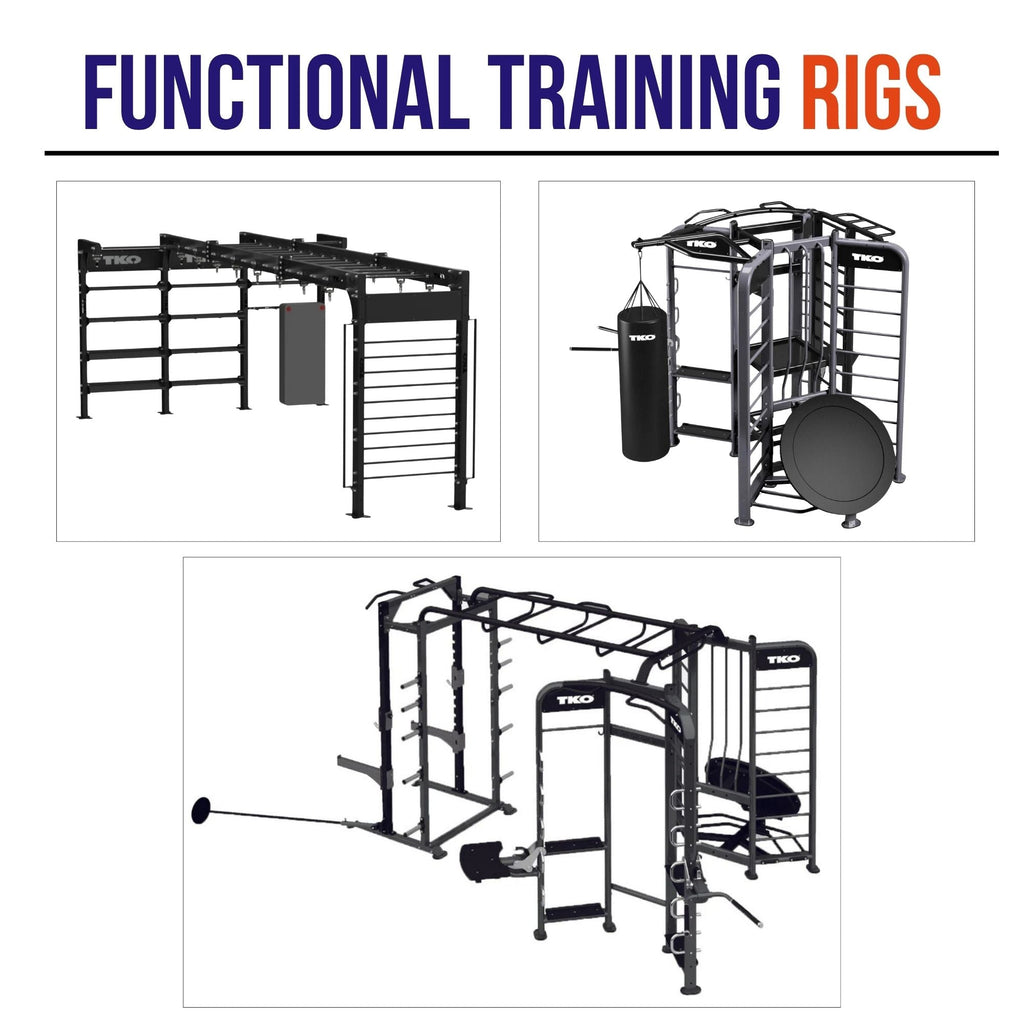
  • Some racks support manufacturer-approved cable attachments, lat-pulldown systems, or functional-training accessories.

    Not every rack is compatible with these upgrades, so check the manufacturer's attachment system before purchasing the rack if cable training is important to you.

Talk With a Strength Equipment Specialist

Tell us about your room, ceiling height, training style, and budget, and we’ll help you compare power racks and power cages that fit your space.

Send us a message