Skip to content
Text or Call for Best Bundle Deals (646) 657-8856

Cable Machines

Cable machines give home users a versatile way to train with adjustable resistance, smoother movement patterns, and more exercise variety than many fixed-path machines. This collection includes functional trainers, cable crossover machines, and cable columns for home gyms, garage gyms, and shared training spaces. If you are shopping for a cable machine for home gym use, start by browsing by type above, then use the filters to compare options by size, features, and price.

Shop by type:
Functional Trainers | Cable Crossovers | Cable Columns

  • Sold out
    $20,750.15
    TORQUE TORQUE 5-Module X-SELECT Wall Cable Station - X1 Package
    2 colors available

    TORQUE 5-Module X-SELECT Wall Cable Station - X1 Package    Create the ultimate cable pulley group training system with the X-SELECT. This pack...

    View full details

How to Choose the Right Cable Machine for Home Gym Use

Not sure which cable machine style is right for your space and training style? Use the guide below to compare functional trainers, cable crossovers, and cable columns so you can choose the right fit for your home gym.

What Counts as a Cable Machine

A cable machine is a resistance machine built around pulleys and cable-based movement. Most cable machines let you train through a wider range of angles than fixed-path strength machines, which makes them useful for upper body, lower body, core, and accessory work.

Most cable machines include some combination of:

  • Adjustable pulleys or fixed pulley positions
  • Cable handles or attachment points
  • Selectorized or plate-loaded resistance
  • Pressing, pulling, lifting, chopping, and row-style movement patterns

Cable machines are popular because they support:

  • More exercise variety in one machine
  • Smoother transitions between movements
  • Better accessory and athletic-style training
  • Full-body training with one setup

Why Cable Machines Work Well in Home Gyms

More exercise variety from one machine

A cable machine for home gym use can cover presses, rows, flys, curls, triceps work, lateral raises, chops, lifts, and many other movements without needing multiple separate machines.

A practical fit for many training styles

Cable machines work well for general strength training, accessory work, athletic movement patterns, rehab-style training, and full-body workouts.

Better movement freedom than many fixed stations

Compared with more traditional multi-station gyms, cable machines usually allow more open movement and more exercise angles, which is why many buyers prefer them for home use.

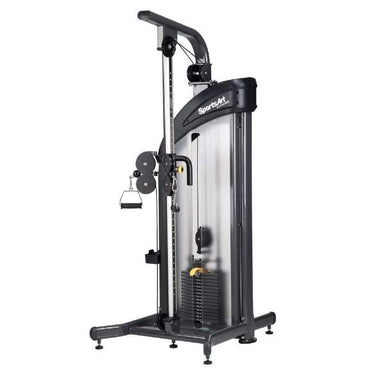
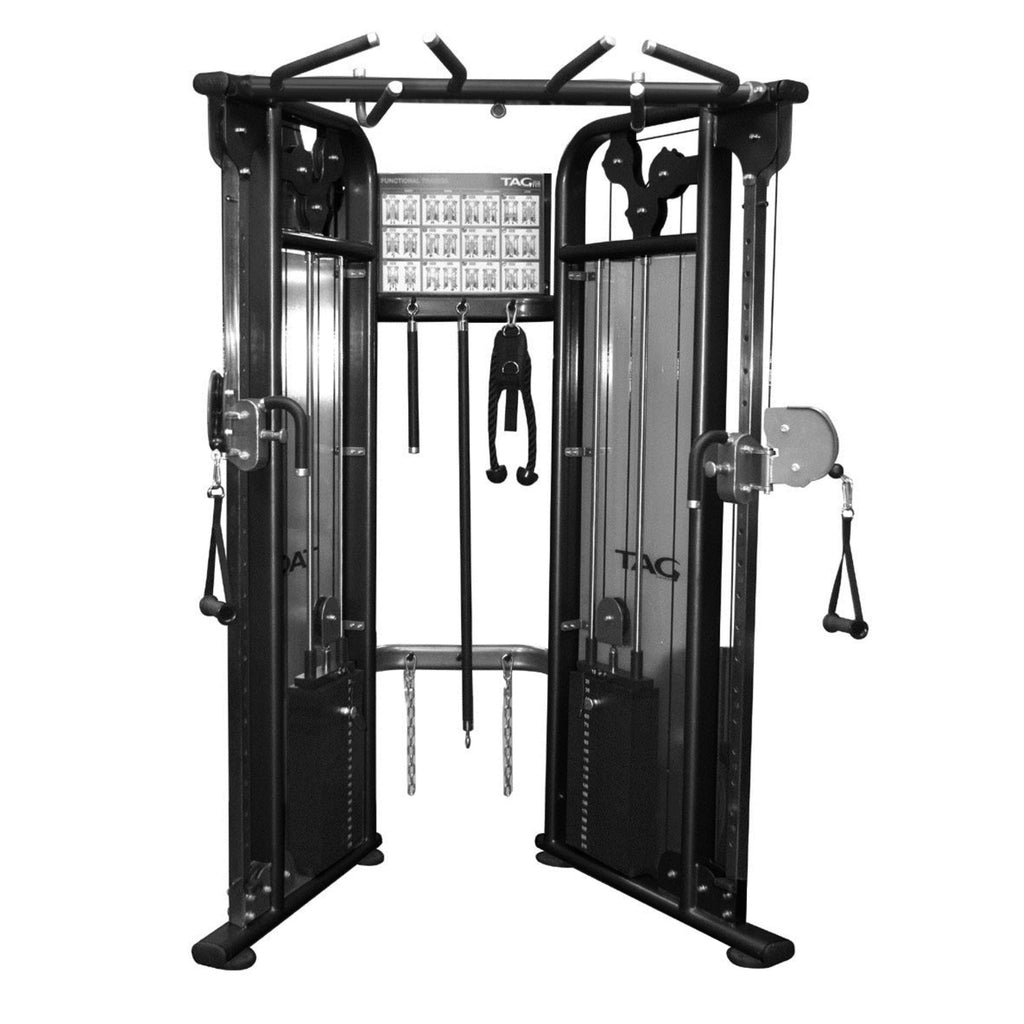
Functional Trainers

Functional trainers belong in the all in one gym conversation because many shoppers looking for an all in one home gym are really looking for a machine that offers broad cable-based training rather than fixed guided stations.

A functional trainer is often a strong fit when:

  • you want more open cable movement
  • you prefer pressing, rowing, chopping, lifting, curling, and accessory work through adjustable pulleys
  • you want more freedom of movement than a fixed-path machine provides
  • you value versatility over traditional guided stations

Functional trainers are especially popular with buyers who want:

  • versatile cable training
  • athletic-style movement patterns
  • broad accessory work
  • a machine that covers a lot of upper-body, lower-body, and core work in one setup

Best for: versatile cable training, movement variety, accessory work
Tradeoff: fewer traditional guided stations than single, dual, or multi-stack gyms

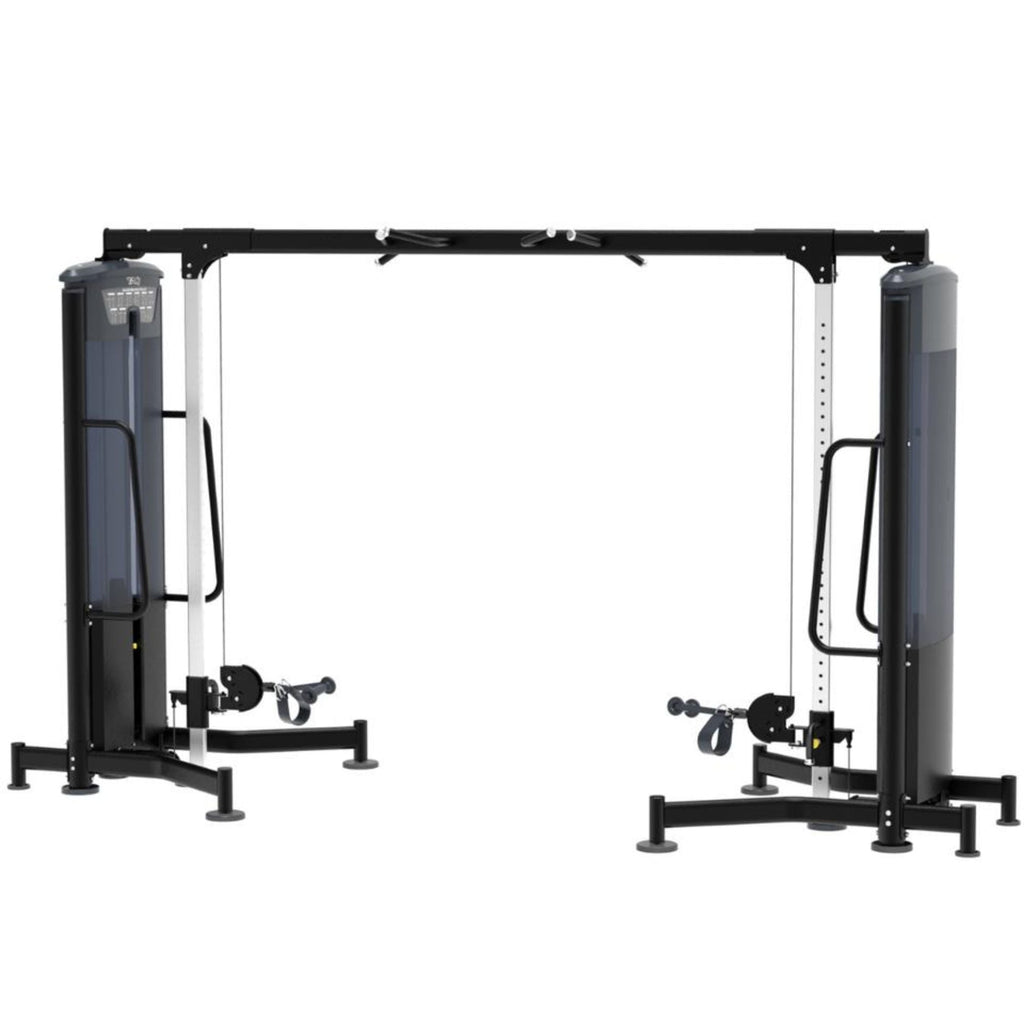
Cable Crossovers

Cable crossovers are a strong fit for buyers who want a wider open-frame cable setup with more lateral space for flys, presses, rows, and broader cable movement patterns. They usually offer a more expansive layout than compact cable machines or cable columns.

A cable crossover is often a strong fit when:

  • you want a wider training area between pulley stations
  • you prioritize chest fly work, pressing, and broad upper-body cable movement
  • you have enough room for a larger machine footprint
  • you want a more traditional gym-style cable setup

These machines are often a good fit for:

  • larger home gyms
  • personal training studios
  • commercial or light commercial spaces
  • buyers who want open cable movement without a smaller compact machine feel

Best for: wide cable movement, fly work, pressing, broader upper-body training
Tradeoff: larger footprint than cable columns or more compact trainers

Cable Columns

Cable crossovers are a strong fit for buyers who want a wider open-frame cable setup with more lateral space for flys, presses, rows, and broader cable movement patterns. They usually offer a more expansive layout than compact cable machines or cable columns.

A cable crossover is often a strong fit when:

  • you want a wider training area between pulley stations
  • you prioritize chest fly work, pressing, and broad upper-body cable movement
  • you have enough room for a larger machine footprint
  • you want a more traditional gym-style cable setup

These machines are often a good fit for:

  • larger home gyms
  • personal training studios
  • commercial or light commercial spaces
  • buyers who want open cable movement without a smaller compact machine feel

Best for: wide cable movement, fly work, pressing, broader upper-body training
Tradeoff: larger footprint than cable columns or more compact trainers

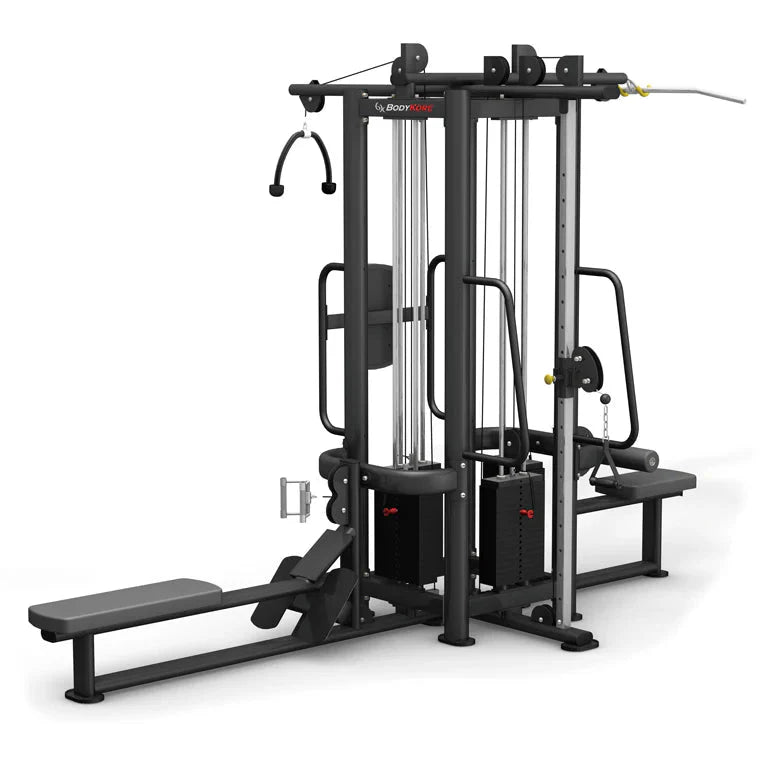
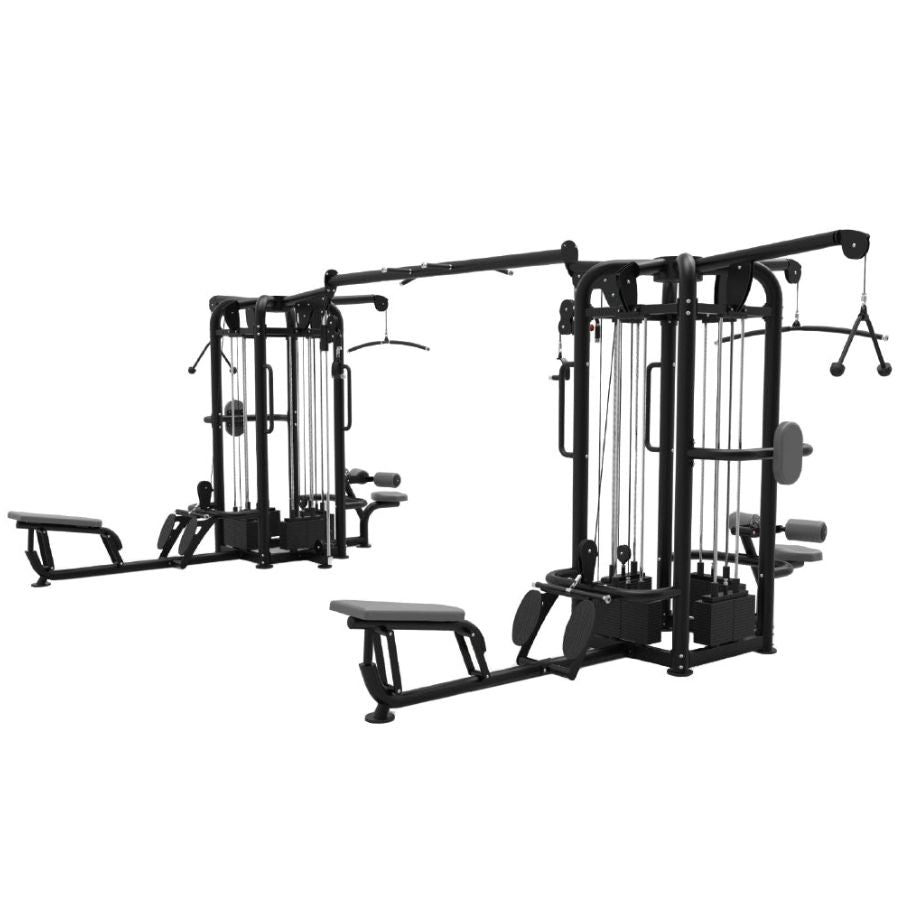
Multi-Station Cable Gyms

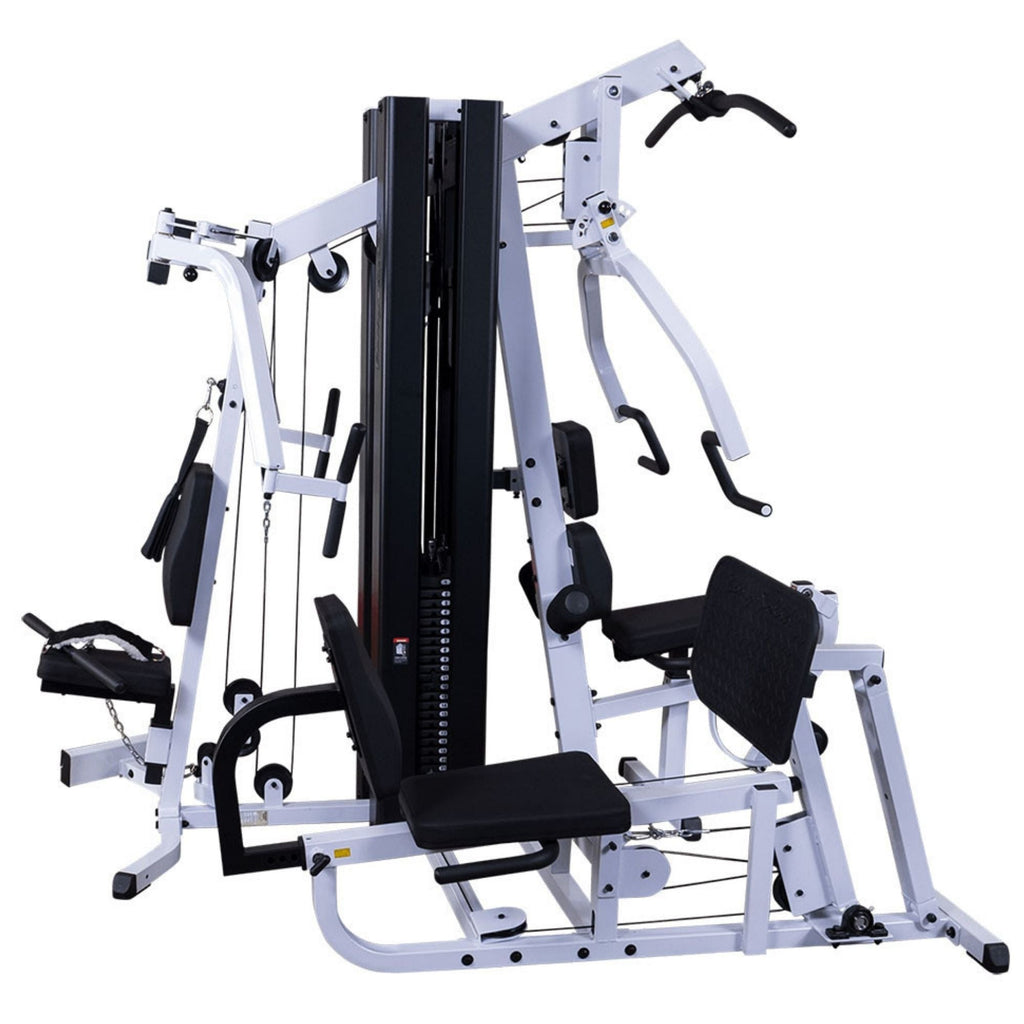
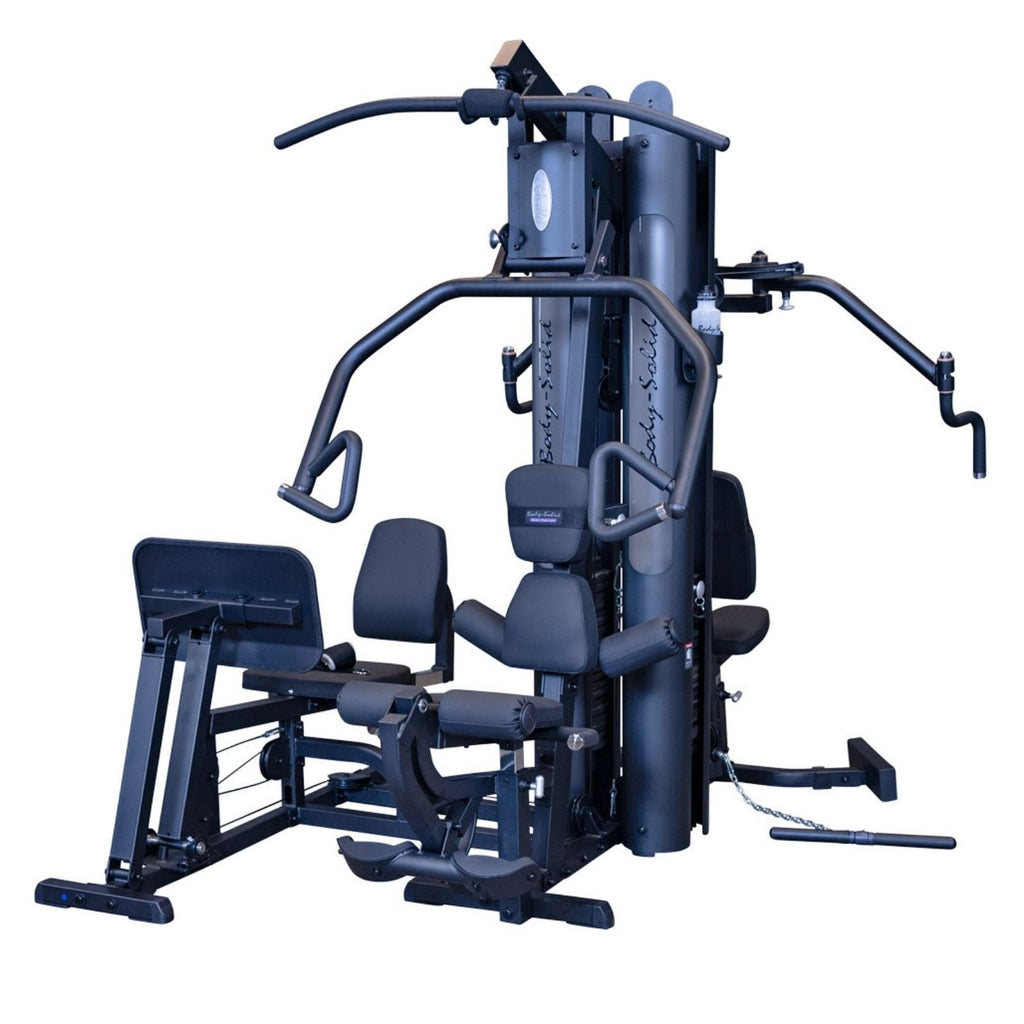
Multi-station cable gyms are built for buyers who need more user capacity, more stations, and a more complete cable-based setup than smaller standalone machines can offer. These systems are often the best fit for commercial gyms, apartment fitness centers, training studios, and larger shared workout spaces.

A multi-station cable gym is often a strong fit when:

  • multiple users may train at the same time
  • you want several cable stations in one connected system
  • you need a more commercial-style training setup
  • you are outfitting a larger facility or higher-traffic workout environment

These systems are commonly used in:

  • commercial gyms
  • apartment fitness rooms
  • schools
  • corporate fitness centers
  • large training studios

Best for: multi-user cable training, more stations, facility use
Tradeoff: larger footprint, higher cost, and more planning than compact cable machines

How to Narrow Down the Right Fit

Do you want the most exercise variety?

Start with Functional Trainers if you want the broadest mix of cable-based exercises in one machine.

Do you want a wider, more open cable setup?

Look at Cable Crossovers if you want more lateral space and a more classic gym-style crossover layout.

Do you need a more compact machine?

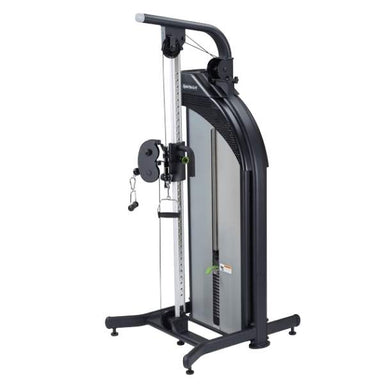
Look at Cable Columns if you want cable training in a smaller footprint.

Are you training mostly at home?

A cable machine for home gym use should match your available space, exercise preferences, and whether you want a versatile trainer or a simpler dedicated cable station.

Cable Machines by Type

Common Buying Mistakes to Avoid

  • Buying a cable machine without measuring both the machine footprint and training clearance

  • Choosing a large crossover when a functional trainer or cable column would fit better
  • Focusing only on the machine frame and ignoring pulley adjustability or attachment options
  • Assuming every cable machine supports the same exercise variety
  • Overbuying for a simple home setup or underbuying when you want broader long-term training variety

Still deciding which cable machine is the right fit? These quick answers cover the questions shoppers usually ask before buying.

Common Questions Asked about Cable Machines

  • A cable machine is a strength machine that uses pulleys and cable resistance to support a wide range of exercises for upper body, lower body, core, and accessory training.

  • The best option depends on your space, budget, and training style. Functional trainers usually offer the most versatility, cable crossovers work well for wider open cable training, and cable columns are often a strong fit for tighter spaces.

  • A functional trainer usually has two adjustable pulleys and is built for broad exercise variety in a more compact format. A cable crossover usually has a wider frame and more open lateral space for classic cable movements.

  • A traditional home gym usually includes more fixed stations like chest press or leg extension. A cable machine gives you more open movement and more exercise variety through pulley-based resistance.

  • Yes. A cable machine for home gym use is a strong option if you want versatile training, smoother movement, and broad exercise variety from one machine.

  • Cable machines are best for buyers who want full-body training, accessory work, more movement freedom, and a machine that supports many different exercise angles.

  • Look at footprint, pulley adjustability, resistance style, attachment compatibility, and whether the machine matches your training goals and available space.

  • Yes, if space is limited and you still want cable-based training. A compact cable machine can be a strong solution for smaller home gyms and garage gyms.

  • A wall mounted cable machine can work well if you want to save floor space and keep your setup compact. It is often a good fit for tighter home gym layouts.

  • For many users, yes. A good cable machine can cover a large amount of upper-body, lower-body, core, and accessory training that would otherwise require several separate machines.

Need Help Choosing the Right Cable Machine?

If you are comparing cable machines and want help narrowing down the best fit for your space, budget, and training style, we are happy to help before you order

Send us a message